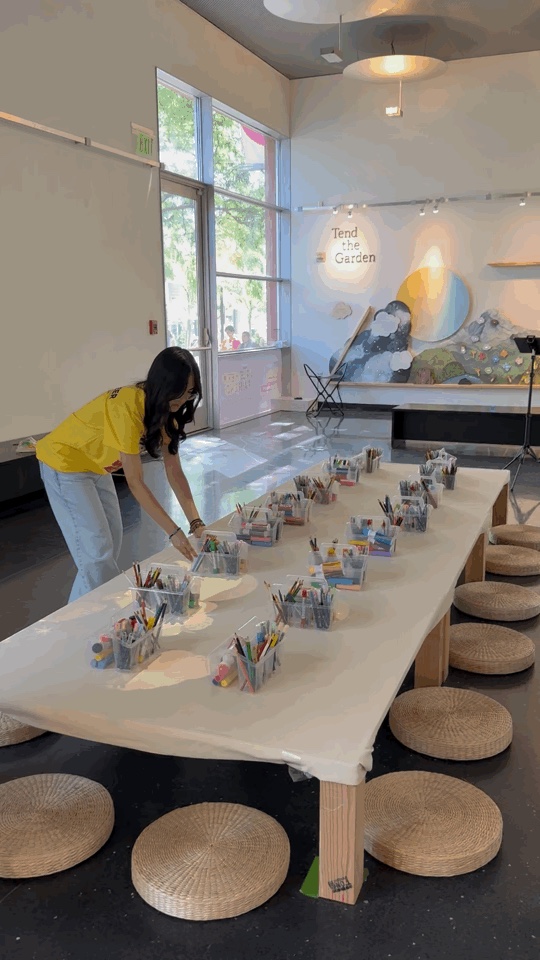
A volunteer helps to prepare the exhibit on opening day.Video by Rong Choy
Can I make a mark? If I leave a mark, what does it look like? What marks do I want to leave?
Every artwork begins with a choice.
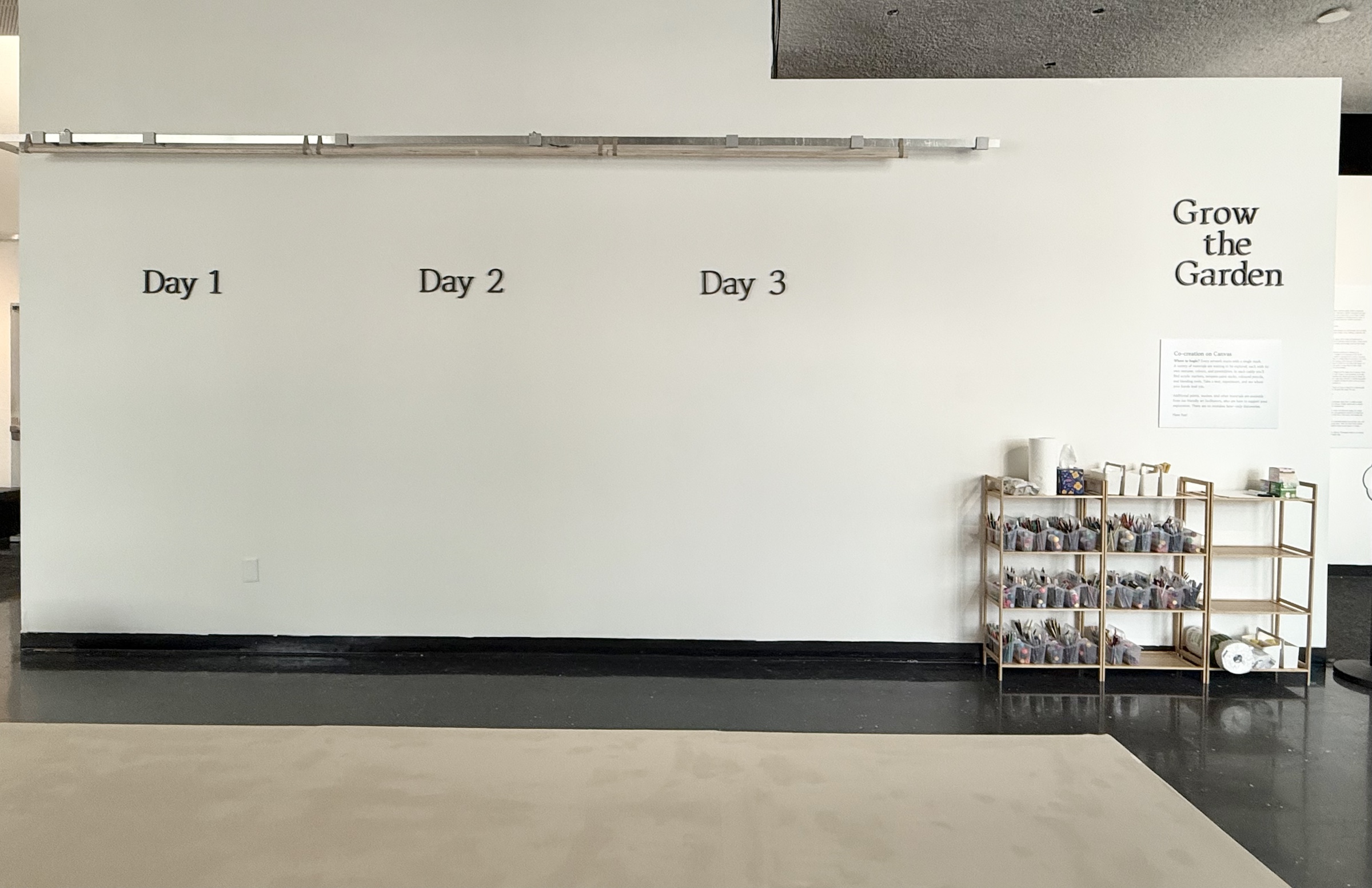
I filled sixteen caddies with a wide variety of materials—acrylic markers, tempera paint sticks, coloured pencils, watercolour washes, and blending tools—making sure there was no shortage of possibilities for exploration. I wondered how children would respond. Would they gravitate toward one medium? Would they experiment? Would they make a mess? Probably. I prepared three different types of tissues.
Then I waited.
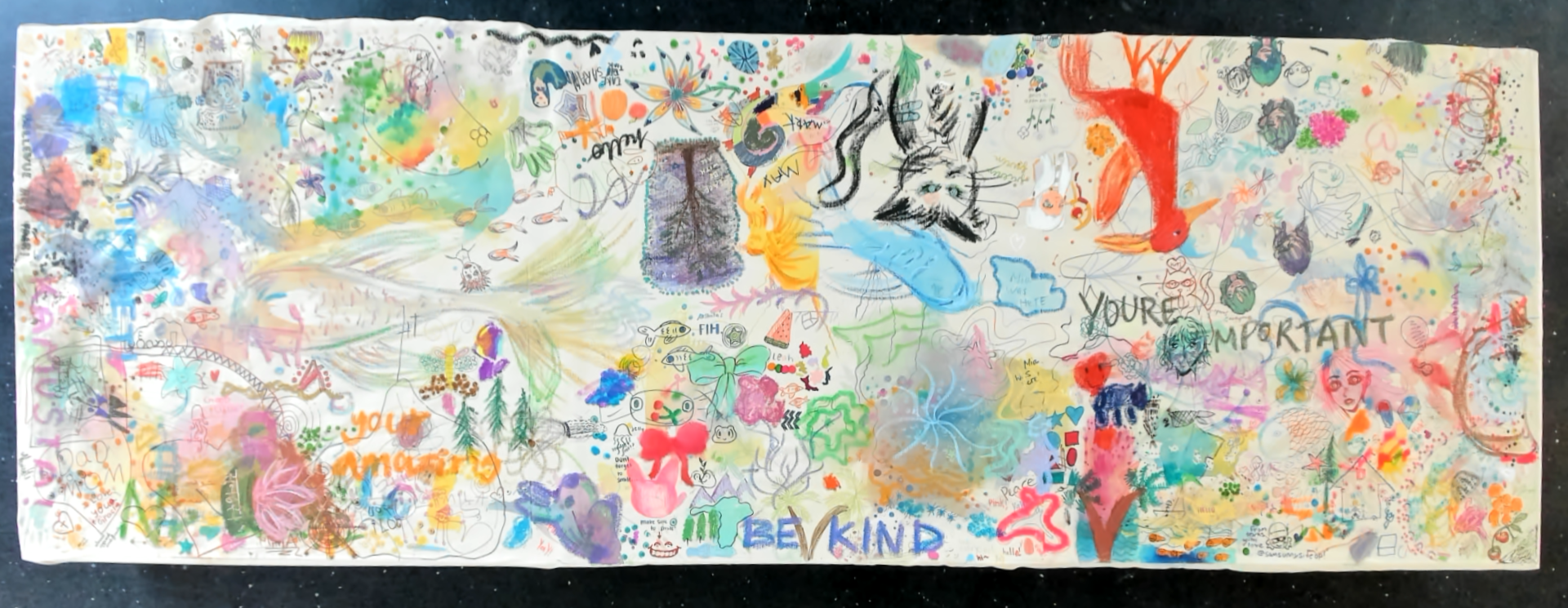
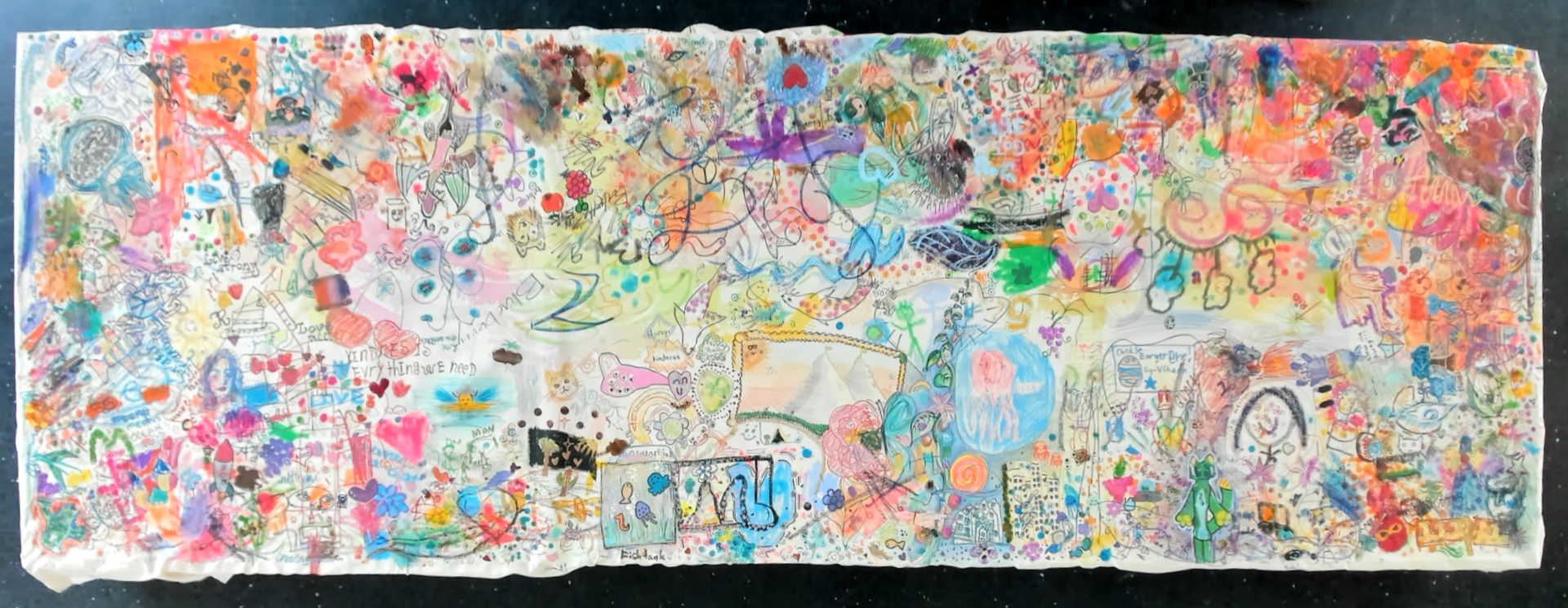
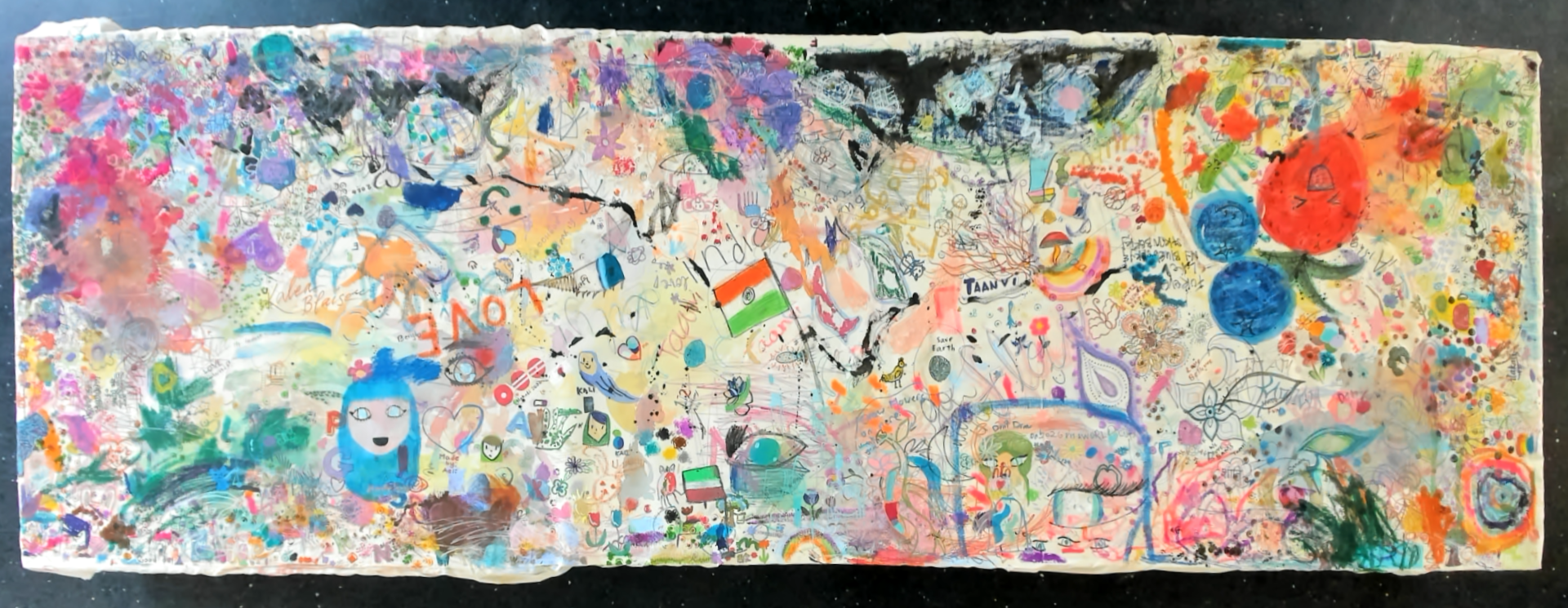
The canvas wall before Opening DayPhotography by Rong Choy
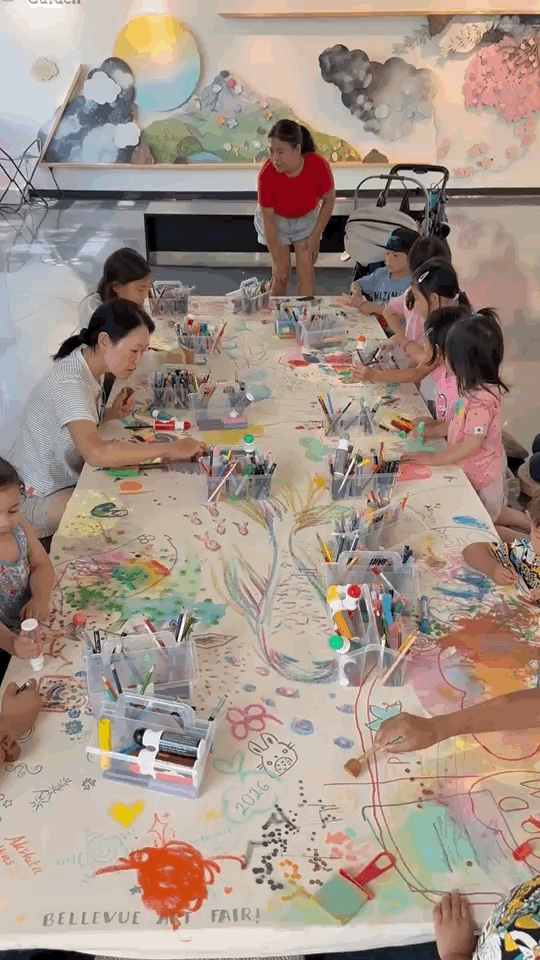
Over the course of three days, I watched hundreds of people approach the canvas. Some made a mark immediately. Others stood back for a while, studying what had already been created before deciding where they belonged. Some searched for empty space. Others happily drew over and alongside marks that were already there.
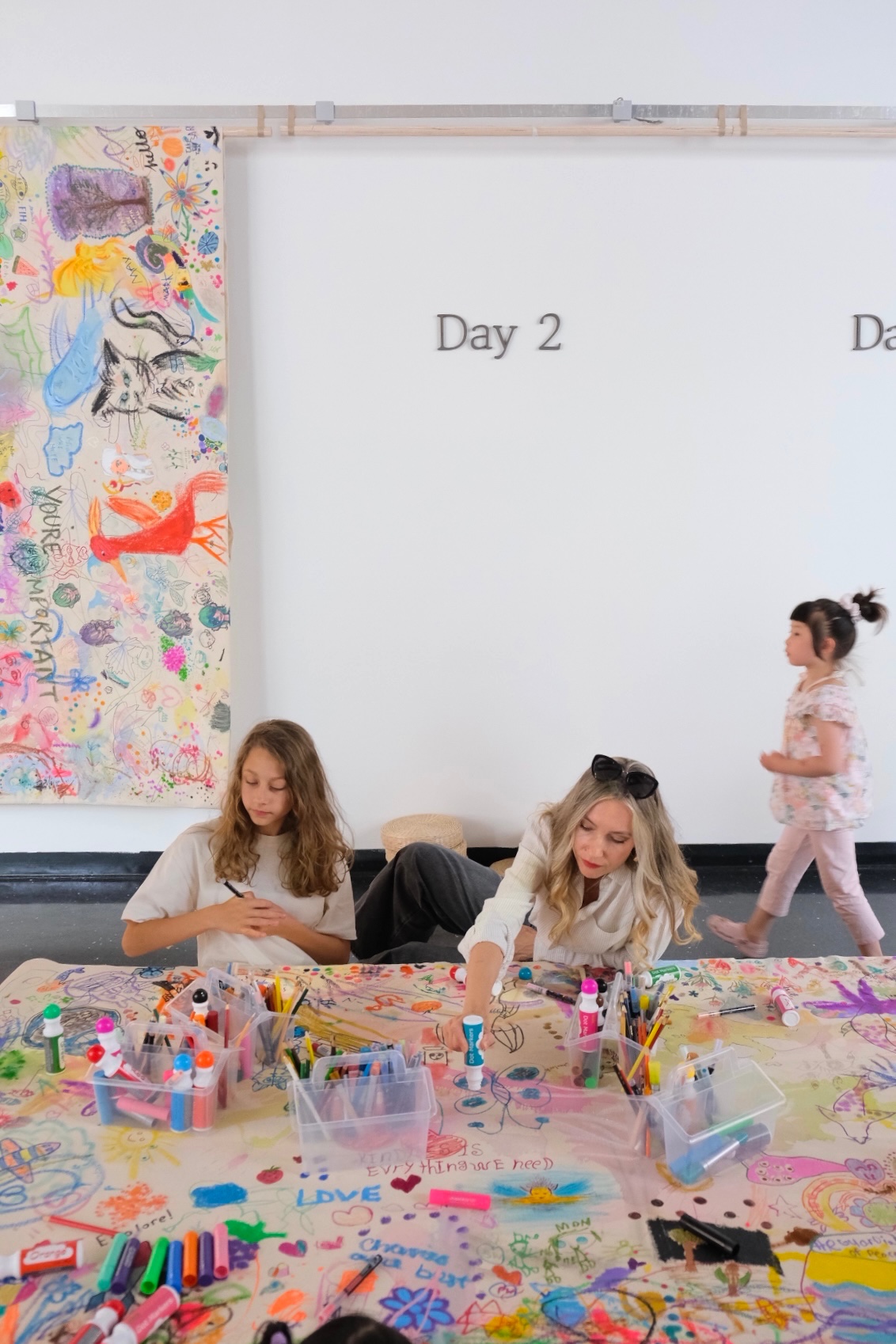
Day 1Day 2Day 3
As visitors drew, the garden responded. Motion sensors transformed gestures into movement. Ian Kaneko composed an original soundscape in which every movement triggered carefully arranged musical chimes, flute phrases, bells, and tones. Each movement triggered 18,378 distinct possible musical responses. Like the canvas itself, the music was co-created—carefully composed, yet endlessly rewritten by the people moving through the space. Read more about Ian Kaneko’s musical collaboration here.
The responsive projections and soundscape were designed to encourage interaction. Every movement was acknowledged with light, animation, and music before gradually fading away, allowing attention to return to the marks themselves. The projection celebrated the act of creating. The canvas remembered it.
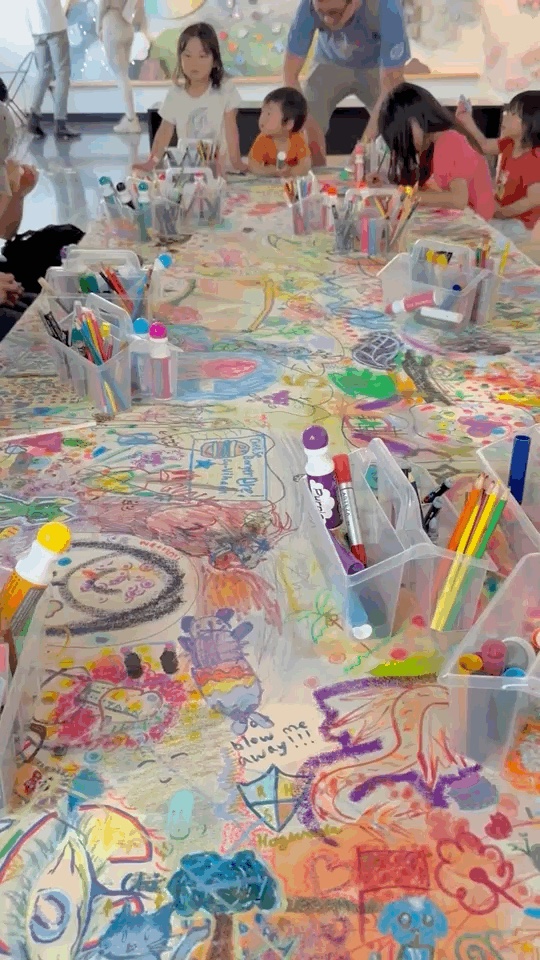
What people chose to draw fascinated me. Every mark felt like a declaration of identity. Some were playful, some careful, some bold, some tentative. Every colour selected, every texture explored, every symbol, line, and dot reflected a series of small decisions. Individually they were wonderful; together they became a portrait of a community.
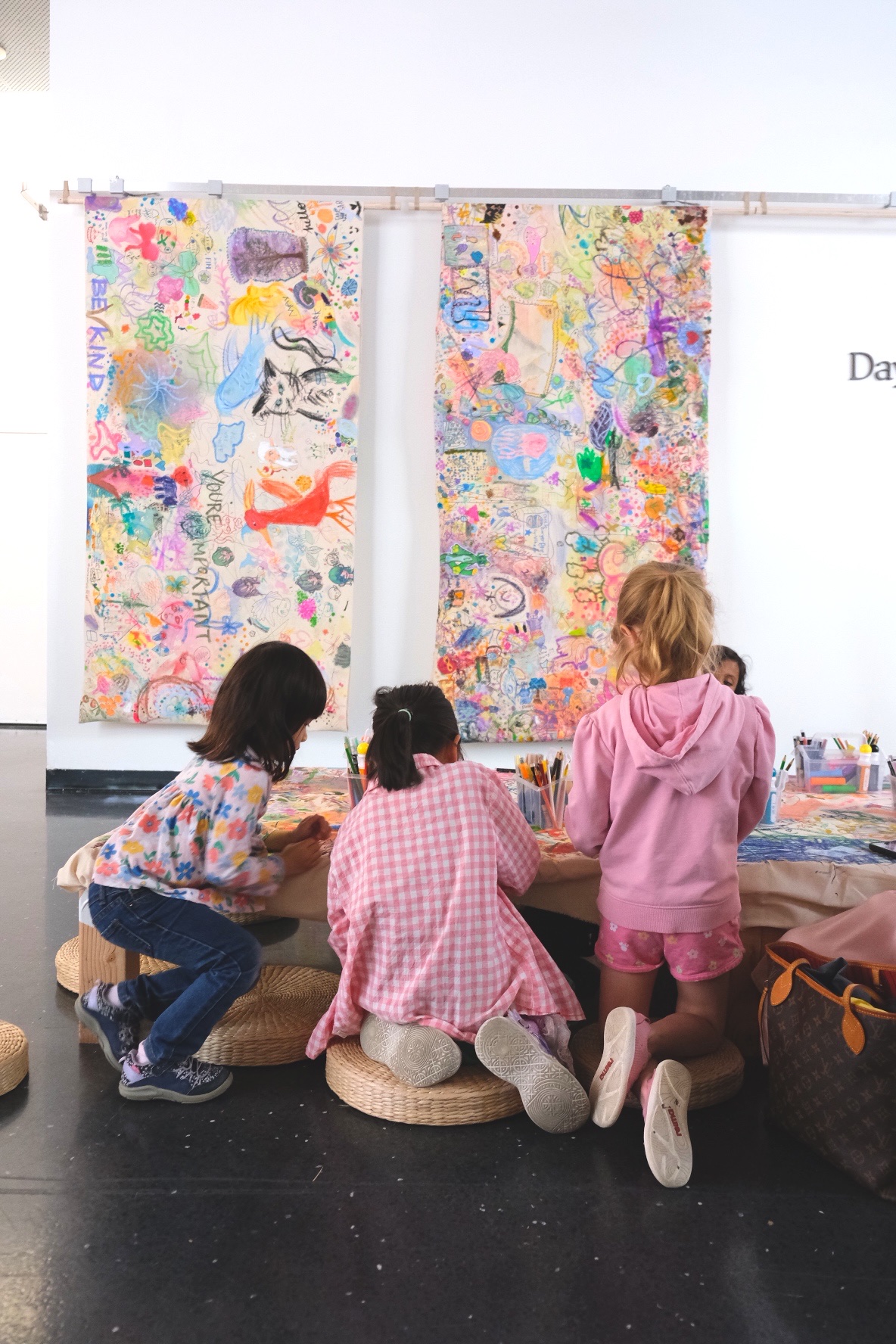
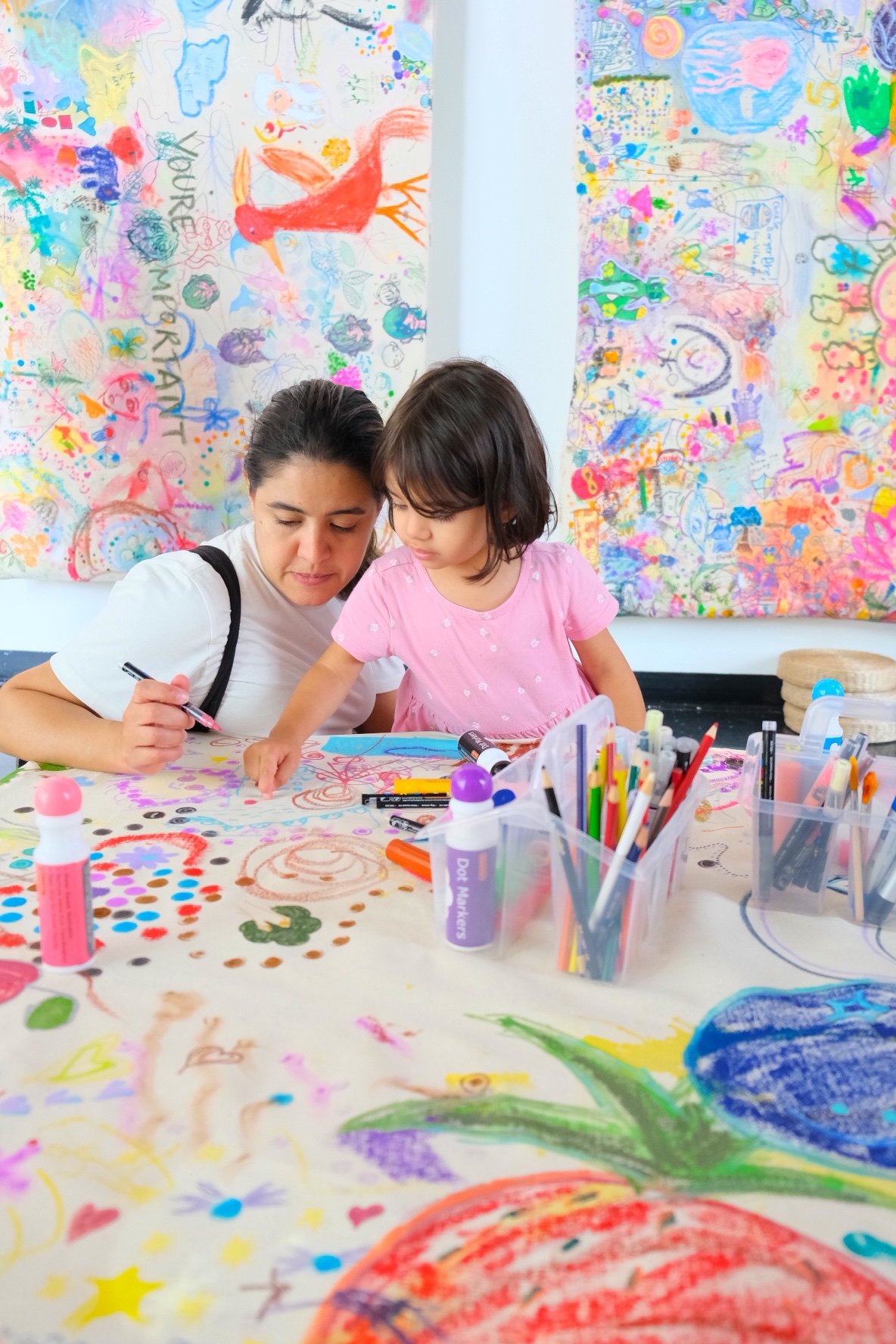
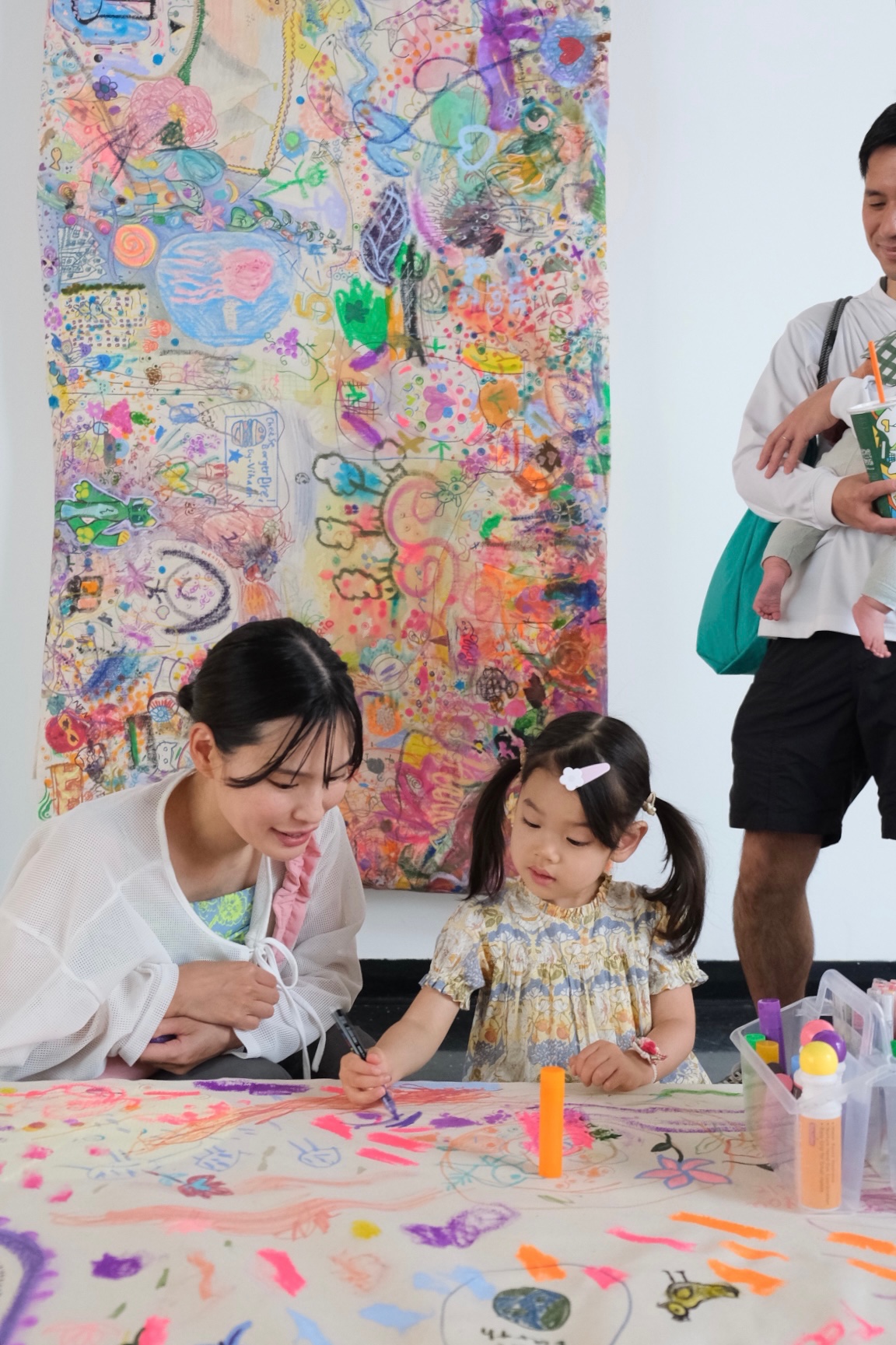
Stepping back from the microscope, what stayed with me wasn’t the drawings themselves, but the shared act of making. The tenderness between grandparents, parents, and children creating together. A glance searching for approval, met with enthusiasm and encouragement. Three friends huddled over the same corner of the canvas, colouring without a care. Entire families immersed in the simple act of making something side by side. Ian’s soundscape softened the room, inviting people to slow down, linger, and simply be together.
Moments of making togetherPhotography by Rong Choy
Watching these paintings emerge over three days changed how I think about collaboration, authorship and community. They are historical records of a unique moment in Bellevue’s cultural history, created during the final Bellevue Arts Fair presented in the Bellevue Arts Museum’s longtime home. They are also records of thousands of small decisions, conversations, and moments of courage. Every mark represents a child, a parent, a grandparent, or a friend choosing to leave something of themselves behind.
Each 12 × 4 foot canvas will be photographed and scanned to preserve every mark exactly as it was made. Their story does not end here. I hope to find new ways for the community to remain connected to the canvases—and to one another—as they continue their journey beyond the museum.
The Last Visitor.
Shizu enters the galleryVideo by Rong Choy
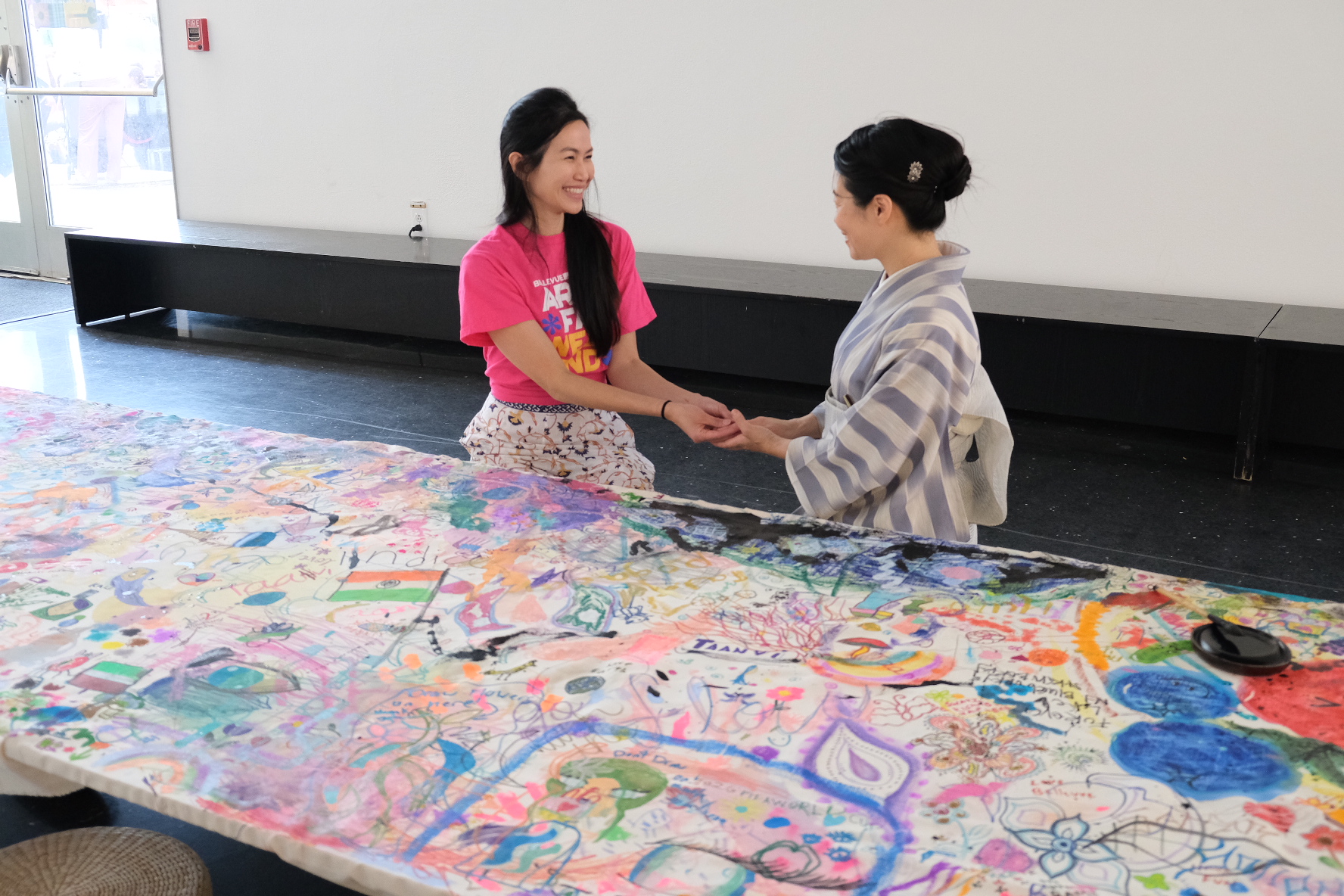
Over the course of the Bellevue Arts Fair, I had the privilege of getting to know Dr. Anna-Marie Moblard Meier, guest curator of Living Traditions, and her co-curator, Japanese calligrapher and cultural historian Shizu Usami. Throughout the fair I hoped she might add a mark to the collaborative canvas, but between demonstrations, workshops, and welcoming visitors, there was never quite the right moment.
Only after the exhibition had ended did that moment finally arrive.
Shizu stood before the canvases, taking in thousands of marks left by children, parents, grandparents, and strangers over three extraordinary days. When I handed her a brush, I saw tears welling in her eyes.
I don’t know what she was feeling in that moment. It seemed she was deeply moved by the work before her. What I do know is that she had spent months preparing Living Traditions, followed by three intense days of teaching, demonstrating and sharing her culture and life’s work. And now before her stood three days made visible, thousands of marks made by the very community she had spent the weekend serving. And Shizu the calligrapher was invited to make the final mark.
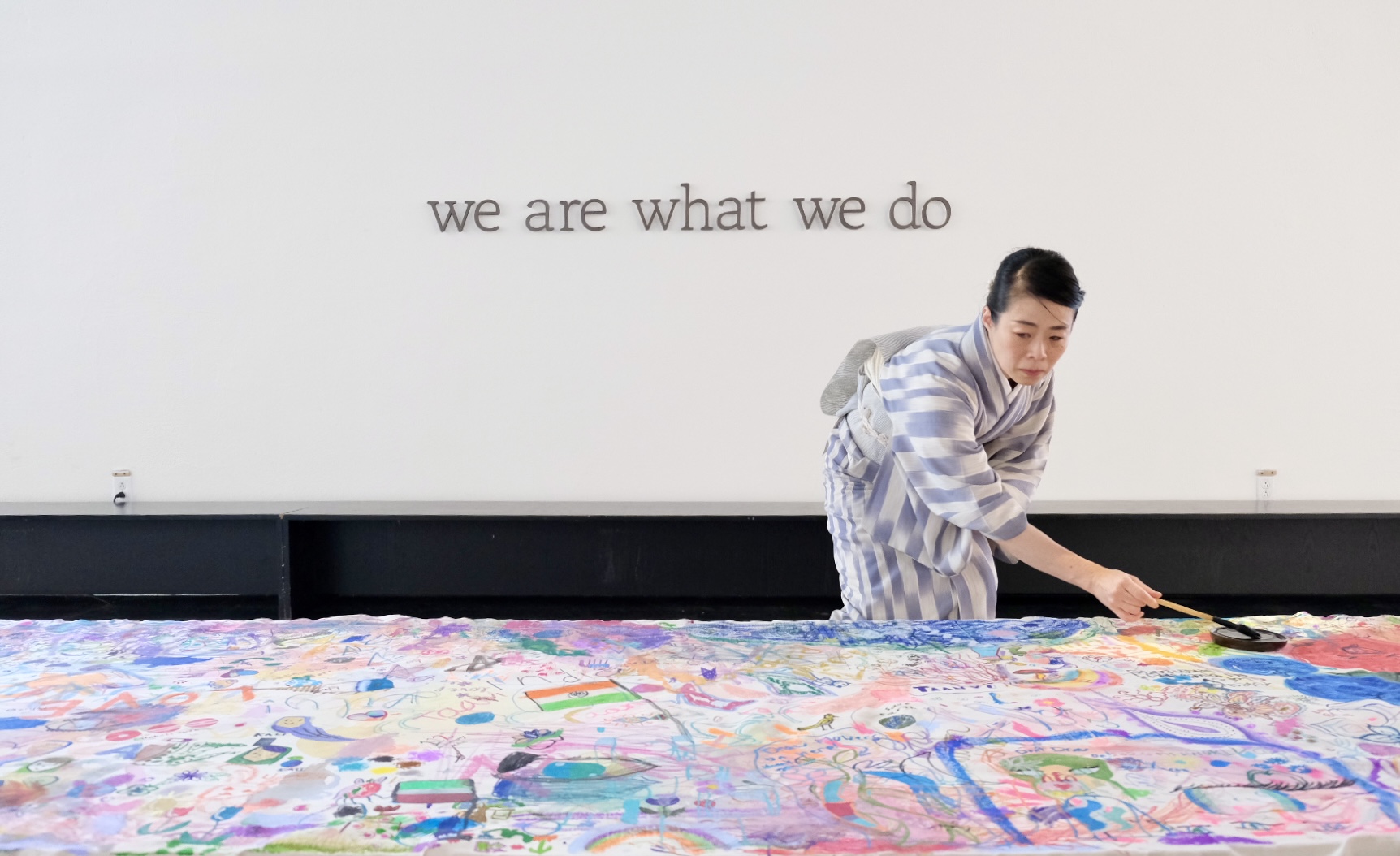
Making the final markPhotography by Rong Choy
Shizu believes, “To write is to breathe.” Throughout With Our Little Hands, one sentence greeted every visitor entering the gallery: we are what we do.
Rather than creating a traditional work of Japanese calligraphy, Shizu responded to the canvas itself. Broad brushstrokes became Mount Fuji alongside Mount Rainier, surrounded by smaller mountains and falling rain. She added her signature among the community’s marks, allowing two mountains—two cultures—to meet on the same landscape.
I couldn’t imagine a more fitting final visitor. Thank you, Shizu.